

 While you may think of forgetfulness and memory loss as challenges only the elderly face but if you are a young person, you may be disappointed to learn that memory loss can affect you too. Unfortunately, like most mental health problems memory has not prejudice. But there’s something you can do to help!
Young or old, if you are finding yourself forgetful there are certain things you can do to help improve your memory. To help you begin today, here’s a few tips on how to enhance your memory.
- Train. Yes, it’s true- like training your body through physical exercises you can help train your brain for memory improvement. “People in the early stages of memory loss can benefit from simple memory training, research suggests according to the American Psychological Association (APA) (1) Using popular training techniques like “mnemonic devices” or “vanishing cues” can help trigger you brain to better remember.
Mnemonic devices: To put this training tactic to work simply visualize something that will help you better remember whatever it is you want to be able to recall later. For example, when meeting a new person whose name is Mrs. Teal, you would visualize that person covered in the color teal to better help you remember their name.
Vanishing cues: This tactic is used more often when trying to recall information. For instance, if you are trying to think of Mrs. Teal’s name but can’t remember it, instead write down on a piece of paper any letters of the name that you can remember. Once seeing the letters on the paper fill in more, and more until you begin to remember. By doing this you are training new areas of the brain to take over defective areas.
- Mental photos. Sometimes, being able to recall memories later on means taking a mental photo or snapshot now. According to the APA, “Good memory requires good learning and good learning is done through forming strong association with new information as you learn it.” (2) While you don’t have to physically walk around life acting like you are taking photos, mentally focusing on new things you are learning or would like to remember later, similar to a camera focuses can help you form those strong associations, and thus help improve your memory.
Make taking notes a routine part of your day. When you set important items down like a cell phone, car keys, or wallet take a moment to focus and take a mental snapshot.
No matter your age, forgetfulness and memory loss can affect you and make life more challenging. But you can work to improve your memory. By working to train your brain and making a point to take mental snapshots all throughout your day you can better challenge your brain and enhance your memory.
Mark D. Parisi, Psy.D. & Associates, P.C. provides counseling, psychological testing, and psychotropic medication management in Mount Prospect and Chicago – serving surrounding Cook, Lake, DuPage, and Will Counties. They accept most insurance and offer extremely affordable sliding scale rates. Call (847) 909-9858 for a free, no-obligation telephone consultation
###
Sources:
- Enhance Your Memory, Training your brain quote, 2015, http://www.apa.org/topics/learning/enhance-memory.aspx
- Enhance Your Memory, Mental photos quote, 2015, http://www.apa.org/topics/learning/enhance-memory.aspx
 While many of us are fully aware of how weather has the ability to affect our physical health, the majority of people today are completely ignorant of the affects weather can have on our mental health. Rain or shine, hot or cold, tornado or hurricane- weather can have a dominating effect on the way we feel and translate the world around us.
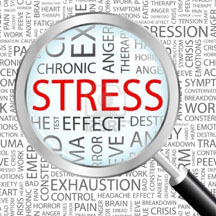 According to the key findings of the American Psychological Association (APA), there are 2 terrible truths about stress today (1). To help you better understand these truths and in return your own personal stress, here’s more.
 Most people experience stress on a daily basis. For some it is mild and easily controlled, but for others it can be serious and begin to affect their everyday lives. There are many ways to manage stress, but exercise is one that can assist in stress management as well as provide many other health and mental benefits.
 2. Encourage Stability. Having a consistent routine as well as a goal to be attained can shift the focus of a person’s mind. Even if the stress factors in his life have not been removed, the stability offered by a proper exercise regimen can allow him to concentrate on something other than those stress factors. If you are in need of some consistency in your everyday schedule, make exercise part of your daily routine, not just something that you do if you have time. The best way to accomplish this is to join a specific class that meets at a specified time or to work out with a friend; if someone is relying on you to be there, you are less likely to make excuses.
 Not only can constructive anger help an immediate relationship or situation, it can have positive effects on the future as well. Studies have shown the repressed anger is more likely to result in violence than immediately expressed anger (3). The following are a few of the positive aspects of anger.
 The Merriam-Webster dictionary defines the term “expectation” as “a belief that something will happen or is likely to happen”; It defines “performance” as “the fulfillment of a claim, promise, or request; something accomplished.” We have expectations in every aspect of life: for our kids, our marriages, our careers. In some areas, we set our own expectations; in others, they are set for us.
 The expectations that you set for yourself and your life can be determined by your overall attitude. If you are an optimistic person, you will most likely have high expectations regarding the outcome of your life, career, and family. You imagine everyone at his best. If you are a pessimist, you might have low expectations or have doubts that you can fulfill expectations in those areas, reasoning that you will be pleasantly surprised if it turns out better than expected but prepared if it does not. These views are not necessarily wrong or right, just different.